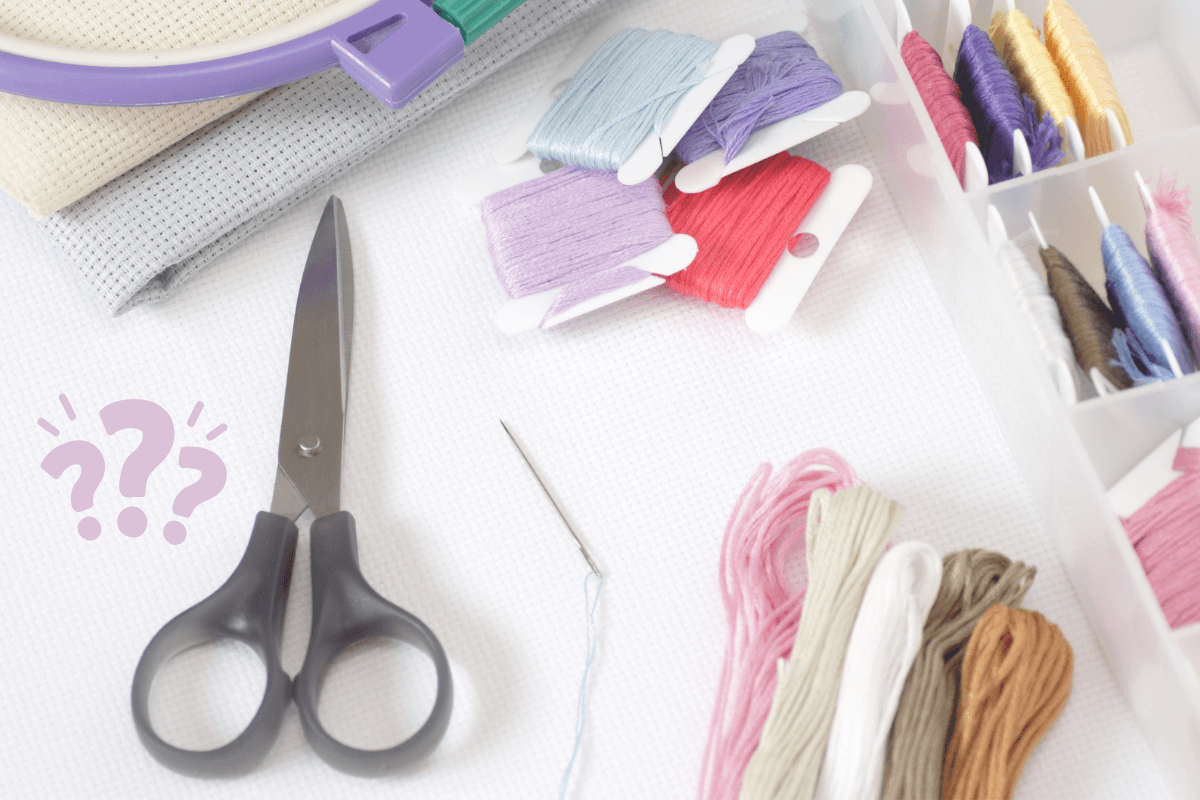
So, if you’re wondering which cross stitch tools & accessories are actually worth buying, here’s our guide.
Embroidery hoops and frames (it depends how you like to stitch)
Verdict: Personal preference
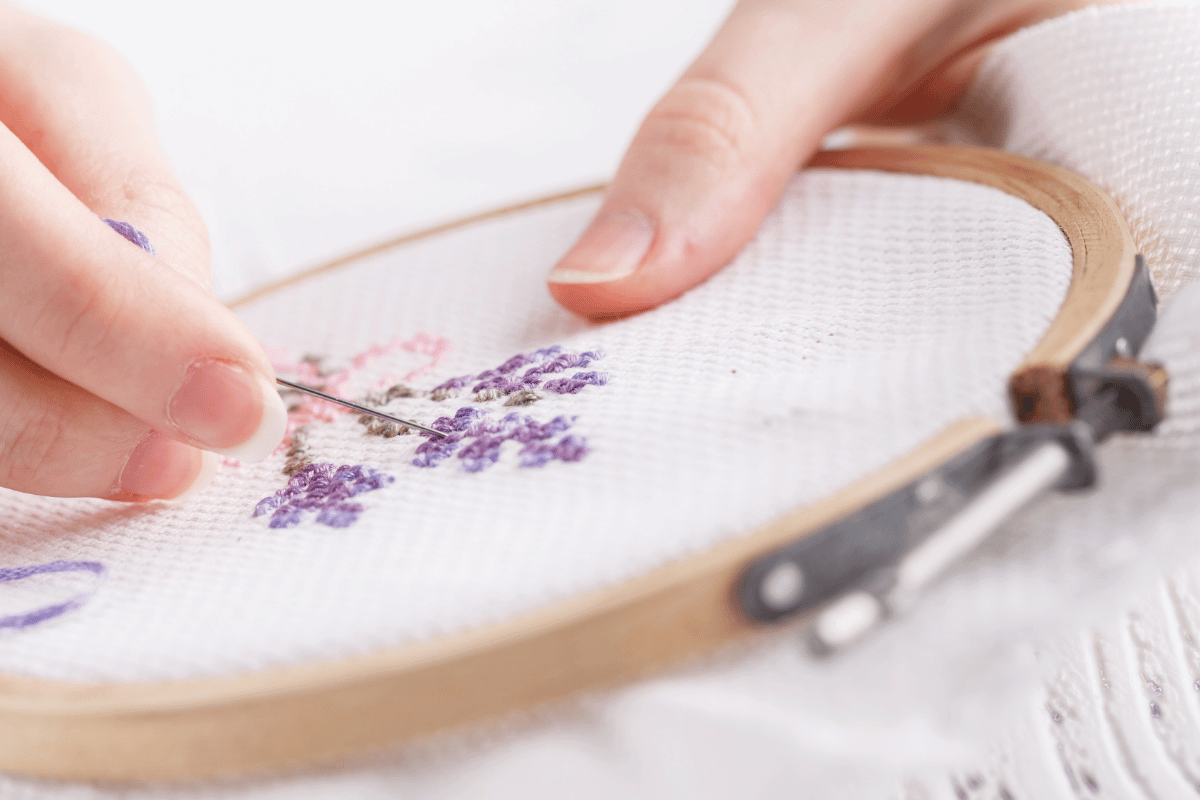
Unlike embroidery, cross stitch doesn’t always need to be worked in a hoop. Some stitchers love keeping their fabric taut, others prefer holding the Aida and stitching “in hand”.
A small embroidery hoop is inexpensive and worth trying if you’re new to cross stitch. Keeping the fabric tension even can make it easier to form neat, consistent stitches. For bigger projects, you might eventually come across Q-snaps, scroll frames and stitching stands. They’re useful, but they’re very much upgrades rather than beginner essentials.
If you’re making one of our smaller cross stitch cards or gift tags you don’t need a hoop at all.
Best for: Anyone who prefers stitching on taut fabric, particularly on larger designs.
Needle minders (surprisingly useful)
Verdict: Usually worth it
A needle minder is one of those things that sounds slightly unnecessary until you have one.
They’re usually made from two small magnets – one sits on the front of your fabric and the other behind it. When you’re not using your needle, you simply place it on the magnetic front rather than sticking it into your fabric, sofa, sleeve or inevitably losing it completely.
For a small cross stitch project you can absolutely live without one, especially if you’re not sewing on a hoop, but if you regularly put your stitching down and pick it back up again, they can genuinely be handy.
They can also be very cute, which admittedly has nothing to do with their practical value but does make them dangerously collectable.
Best for: Regular stitchers, serial needle-losers and anyone with pets or small children around.
Thread organisers and thread tidies
Verdict: Worth it
Thread organisation is one of the least exciting parts of cross stitch right up until you’re faced with twelve almost-identical shades of blue tangled together.
Thread organisers come in lots of forms, from simple cards with holes for individual colours to bobbins and storage boxes.
For smaller projects, we particularly like simple thread tidies where each colour has its own labelled space. They keep cut lengths of thread separate while you’re working and make it much easier to pick a project back up without having to decipher what everything is.
For larger projects or a growing stash of embroidery thread, bobbins and storage boxes become much more useful.
You don’t need an elaborate organisation system on day one though – a piece of card with labelled holes works perfectly well too and it’s very easy to make your own.
Best for: Multicoloured patterns, works in progress and anyone who has ever asked themselves, “Is this DMC 321 or 817?”
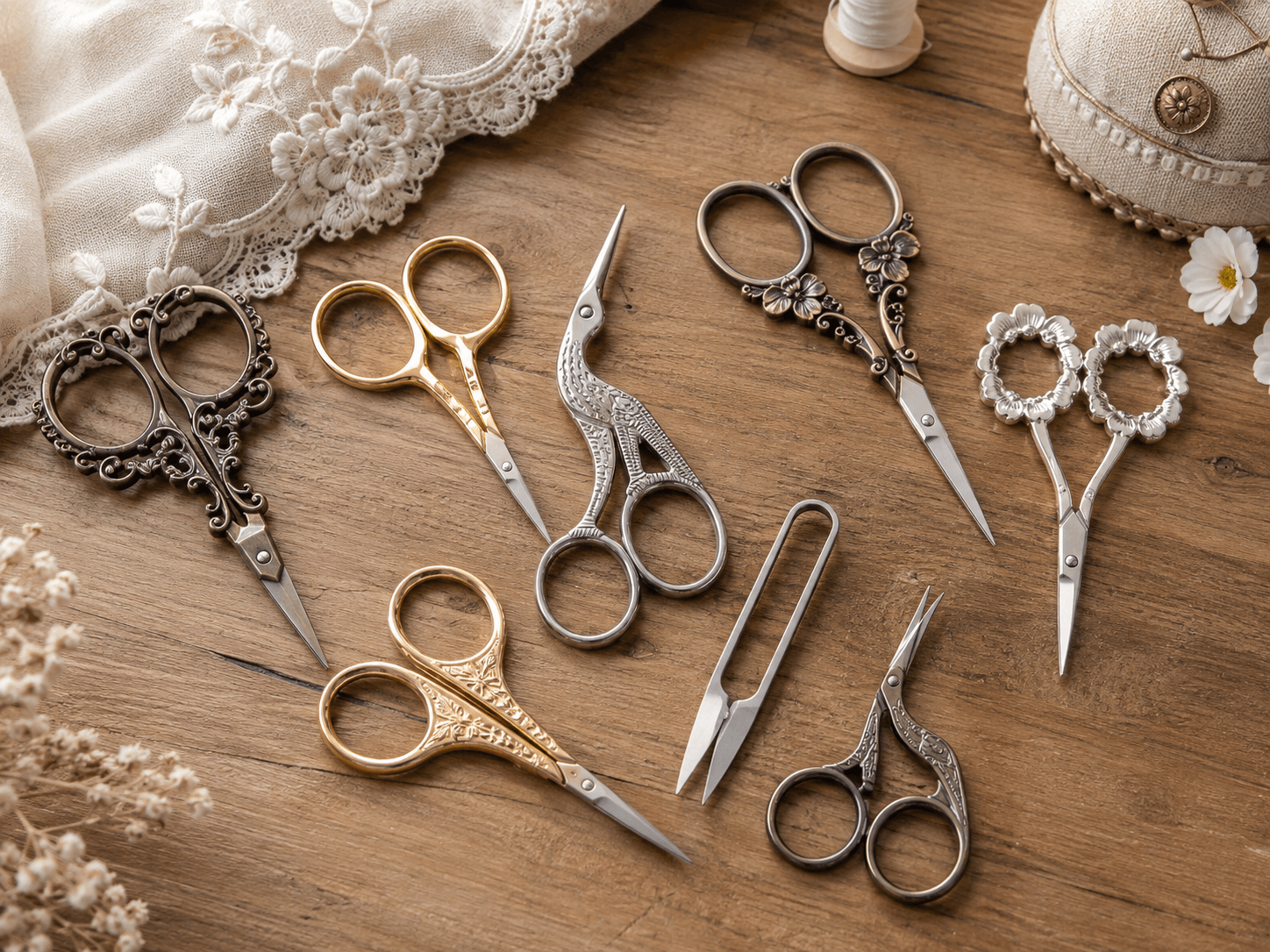
Embroidery scissors: worth having, but they don’t need to be fancy
Verdict: Worth it
You certainly don’t need an ornate pair of stork-shaped embroidery scissors to cross stitch. You do, however, want a small pair of sharp scissors.
Embroidery scissors make it easier to snip thread closely and neatly, particularly when you’re finishing off stitches at the back of your work. Their smaller size also makes them much easier to keep with your project. The important thing is sharpness rather than how decorative they are.
That said, if you desperately want the tiny gold stork scissors, we’re not here to stop you.
Best for: Everyone who stitches regularly.
Needle threaders (tiny but mighty)
Verdict: Very worth it
Possibly the least glamorous item on this list, but one of the most useful.
If threading a tapestry needle occasionally makes you question your eyesight, dexterity and general competence as a human being, get a needle threader. They’re inexpensive, take up almost no space and are particularly useful when working with multiple strands or when the end of your embroidery thread has started to fluff. You may not use one every time you stitch, but when you need it, you’ll be extremely pleased it’s there.
Best for: Honestly? Almost everyone.
Floss conditioner (useful, but definitely optional)
Verdict: Nice to have
Floss conditioner is designed to smooth embroidery thread, reduce tangles and make thread easier to work with. Some stitchers swear by it, others happily cross stitch for decades without ever owning any.
Modern embroidery thread such as DMC is already designed to stitch smoothly, so for most everyday cross stitch projects you shouldn’t need conditioner.
If you find your thread constantly tangling, there are a few things we’d try first:
- Use shorter lengths of thread.
- Let your needle hang occasionally so the thread can untwist.
- Separate the individual strands before putting them back together.
- Avoid pulling knots tighter when they form.
If you still struggle with tangles, a thread conditioner may be worth experimenting with.
Best for: Stitchers who regularly struggle with tangles or particularly fluffy threads.
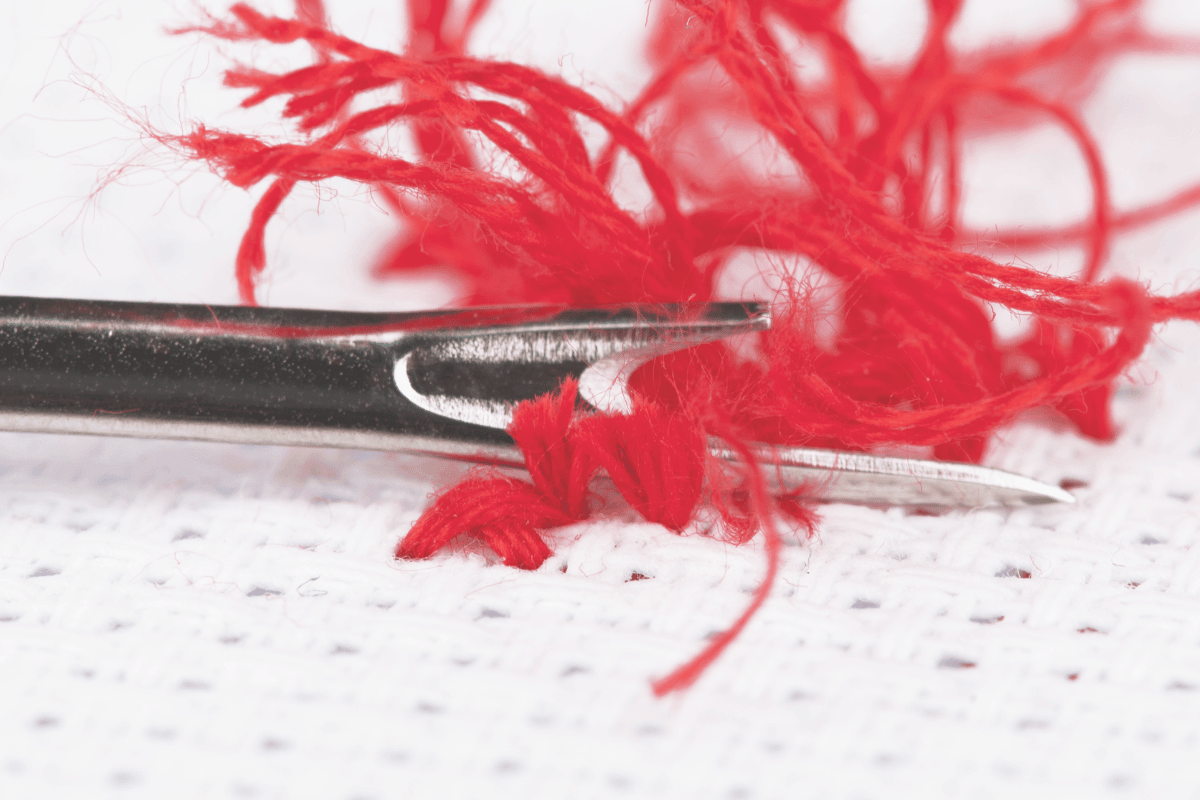
Unpickers and seam rippers (proceed with caution!)
Verdict: Usually unnecessary
Mistakes happen.
In cross stitch, removing incorrect stitches is often referred to as frogging (apparently because you have to “rip it, rip it”…cross stitch humour is niche!). But although seam rippers are brilliant for sewing, we wouldn’t usually reach for one when undoing cross stitch.
A seam ripper has a sharp blade, which means there’s always a risk of accidentally cutting the Aida or neighbouring stitches. For most mistakes, it’s safer to use the tip of your needle to carefully pull stitches back out and a small pair of tweezers can also be helpful for removing the little pieces of thread left behind afterwards.
So if you already own an unpicker, keep it in your sewing kit, but we wouldn’t consider it an essential cross stitch purchase.
Best for: Sewing. Less so for cross stitch.
Grime guards (clever, but mainly for larger projects)
Verdict: Nice to have
Despite the slightly horrifying name, a grime guard is simply a fabric cover that wraps around the edge of your embroidery hoop or frame. It protects your stitching from oils and dirt on your hands while you’re working and gives you somewhere to tuck excess fabric.
For a little cross stitch card you’re going to finish in an evening or two? Probably overkill. For a large project that’s going to spend six months travelling between your sofa, craft bag and coffee table? Much more sensible.
Best for: Large and long-term projects.
Project bags (not essential, but extremely convenient)
Verdict: Worth it if you stitch on the go
You don’t need a dedicated cross stitch project bag. A zip pouch, pencil case or reusable bag can do exactly the same job.
What is useful is keeping everything for a particular project together: pattern, thread, fabric, scissors and needle. This is especially handy with smaller projects because they’re ideal for taking on trains, holidays or anywhere else you might have a spare half hour.
Just make sure your needle is safely attached to something before throwing the whole lot into your handbag. Ask us how we know..
Best for: Travel, multiple works in progress and avoiding mysterious loose needles.
Magnifying lamps and craft lights (not just for poor eyesight)
Verdict: Worth considering
Good lighting makes an enormous difference to cross stitch.
You may not need a specialist craft lamp if you normally stitch next to a nice bright window, but stitching dark thread onto dark fabric on a winter evening can quickly become an endurance sport.
Daylight-style craft lamps can help you distinguish similar thread colours and see the holes in your fabric more clearly.
Magnification is more personal. Some stitchers love it, particularly when using finer fabrics or working on very detailed designs, while others find it gets in the way.
Our suggestion? Start with good lighting. Add magnification later if you actually feel you need it.
Best for: Evening stitching, detailed projects and darker fabrics.
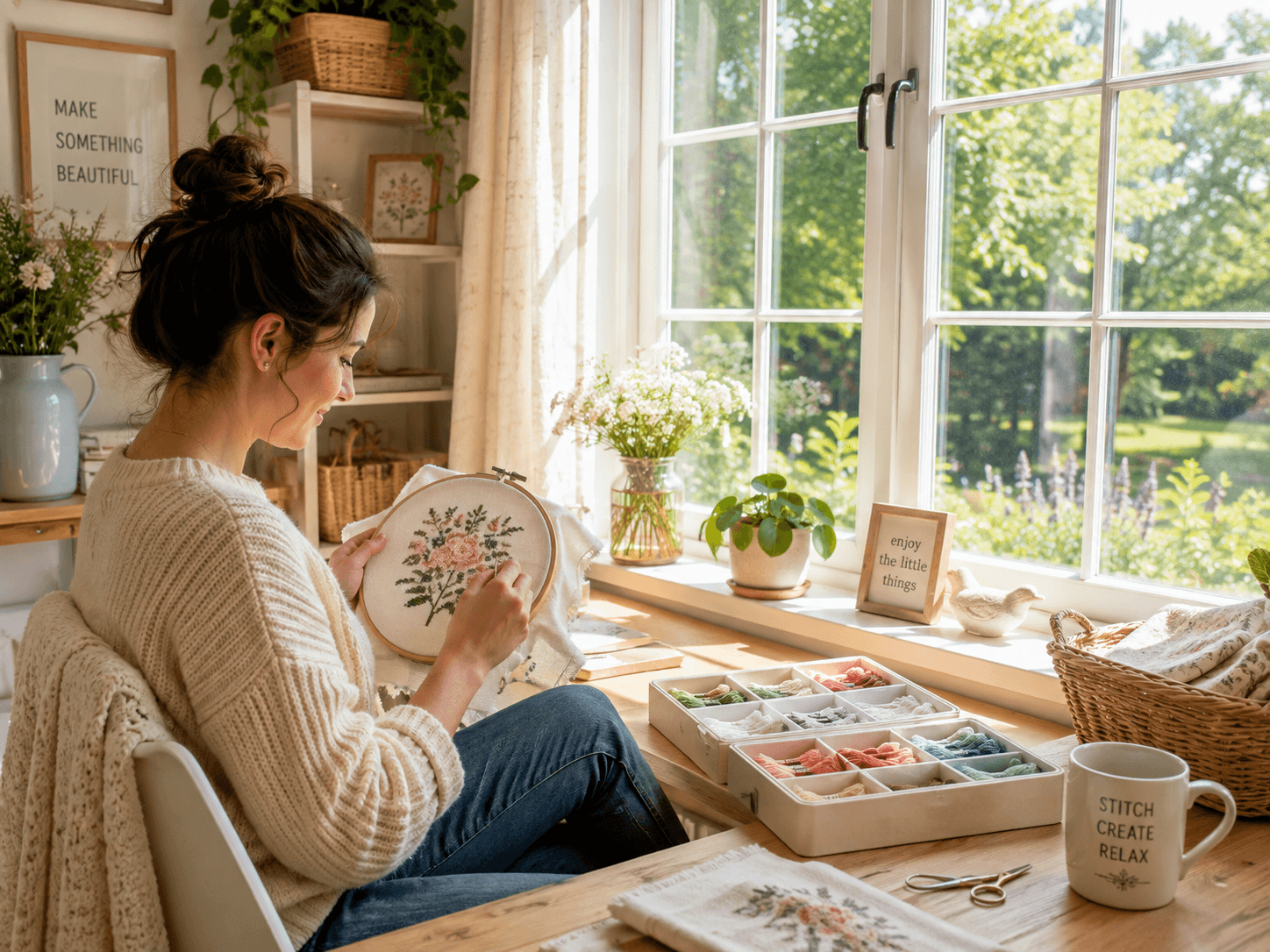
So, what do you actually need for cross stitch?
If you’re just starting out, don’t feel you need to assemble an enormous craft kit.
The essentials really are very simple: Aida + embroidery thread + tapestry needle + pattern + scissors. That’s enough.
If we were adding accessories in order of usefulness, we’d probably choose:
- A small pair of sharp embroidery scissors
- A needle threader
- A thread organiser
- A needle minder
- A project pouch or bag
After that, we’d only buy things when you discover a particular problem you want them to solve.
Love stitching with taut fabric? Try a hoop.
Constantly getting tangled thread? Experiment with floss conditioner.
Working on huge projects? A grime guard or frame might make sense.
Struggling to see your stitches in the evening? Invest in a good craft light.
That’s really the secret with cross stitch accessories – don’t buy something just because other stitchers use it, buy it when it makes your particular way of stitching easier.
And don’t worry if your entire cross stitch toolkit currently consists of a needle, a pair of kitchen scissors and an old takeaway tub full of thread – we’ve all got to start somewhere.